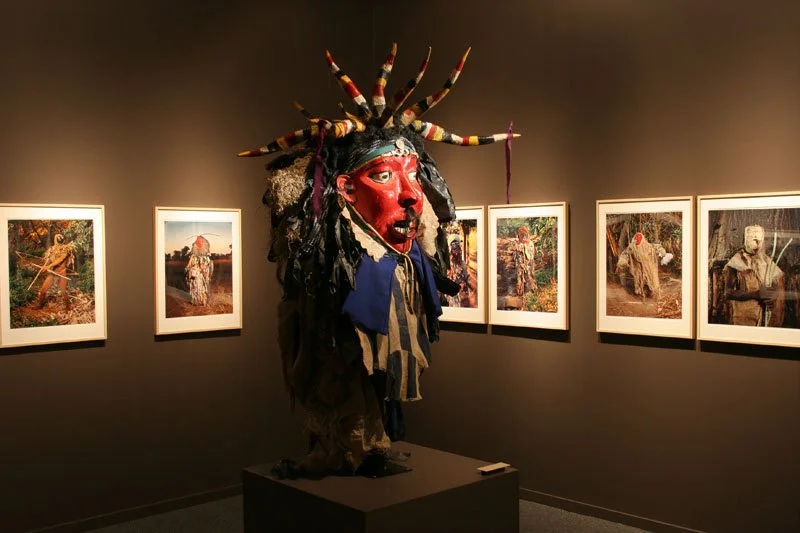
THE ELEPHANTS HAVE FOUR HEARTS
NYAU MASKS RITUALS
The Secret spirit society of the Chewa people of Malawi.
Presentation House, North Vancouver, 2005
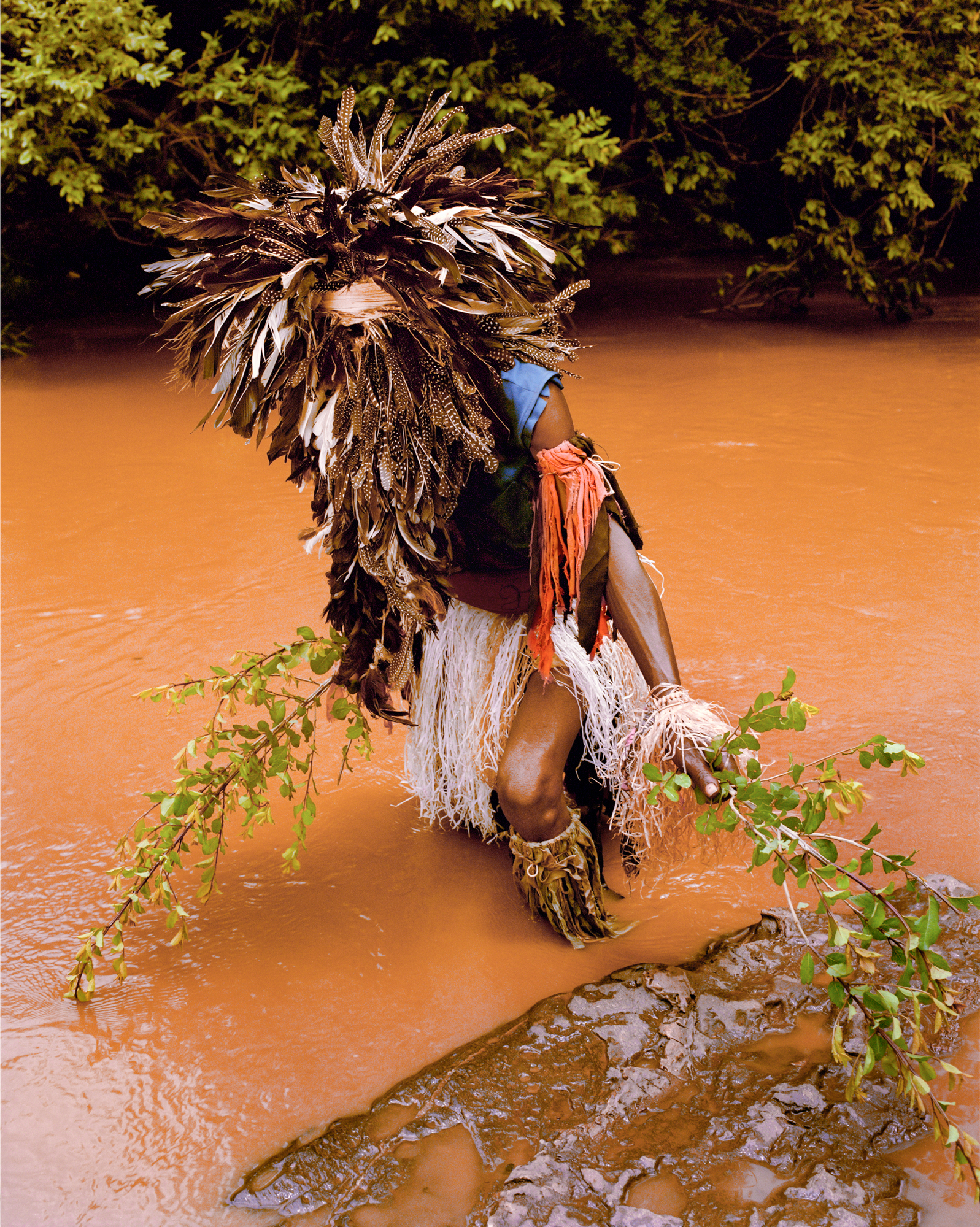
“Kapoli” / ‘to stand up from hoeing’ emerging from sacred pool. Kapoli's friendly appearance in the village announces the imminent performance of Gule Wamkulu/the Great Dance. Heyshott Farm, Zimbabwe 1996
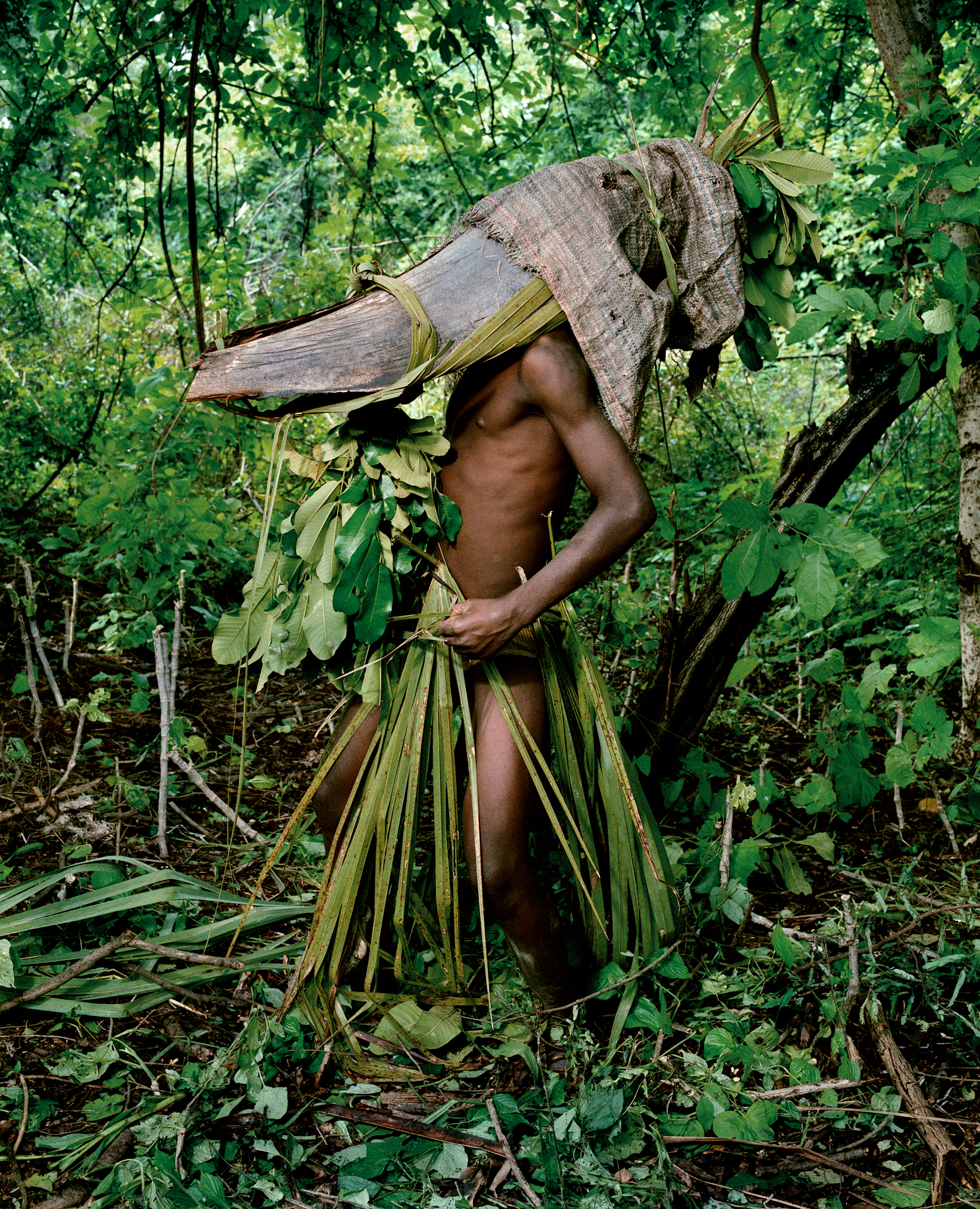
"Tidyenawo” / ‘let’s eat together’ Chatewa village, Kachindamoto District, Malawi 2000

“Ndapita ku maliro, nkhuku mutsekele” / ‘I went to the funeral, lock up the chicken’ Representing a toothless old man with bulging cheeks and walking stick, Ndapita… warns young people of the village to observe the "mwambo", the traditional rules of ritual coolness during the time of funeral rites, lest they create conditions of “ndulo”, a wasting sickness caused by ‘cutting’ the rules of culture and abstention from sexual activity during the burial period in order to allow the deceased a smooth transition into the ancestor World of the Dead. Lunguzi village, Kachindamoto District, Malawi 1999
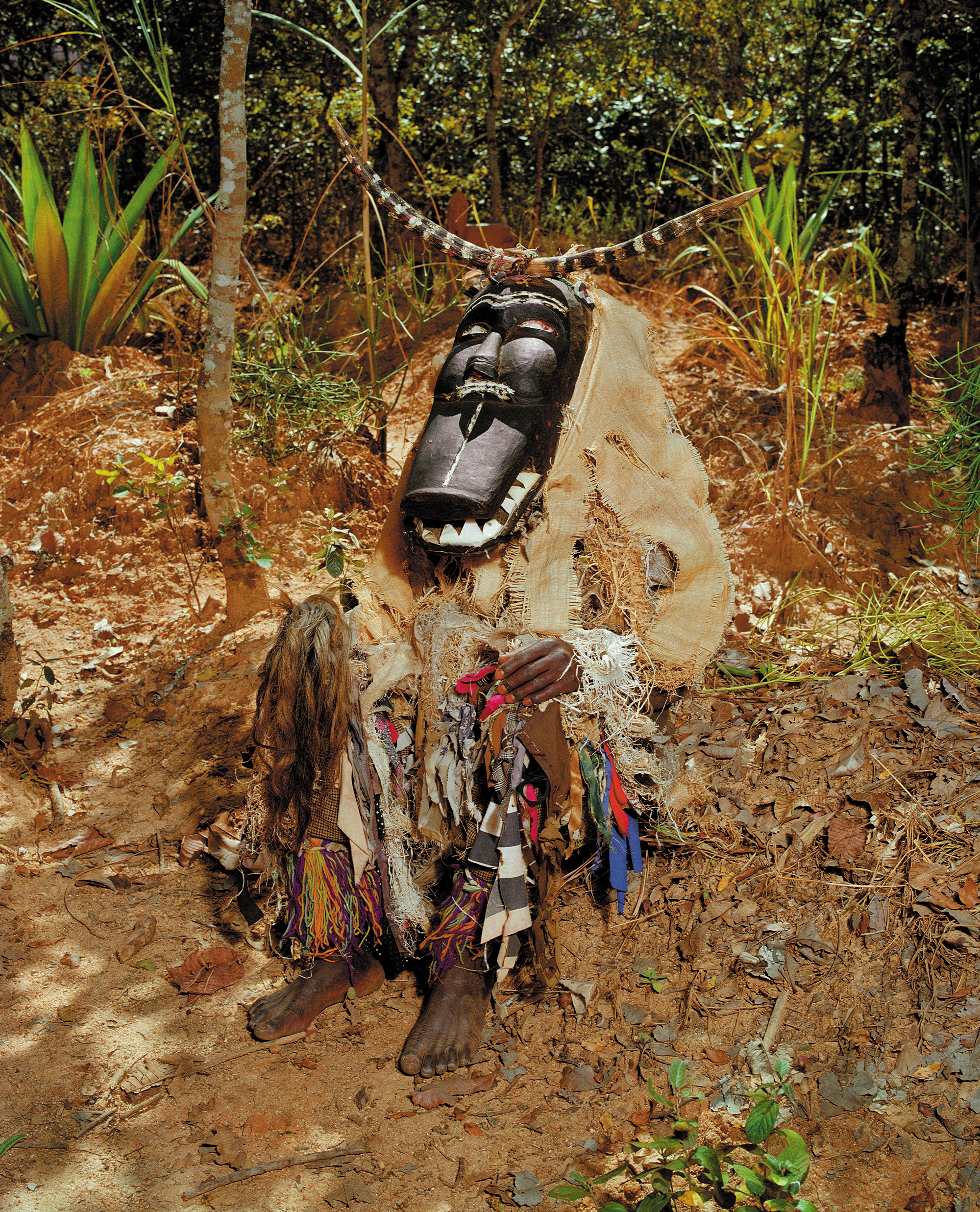
“Chimbano” / ‘the big trap’ A cross between a crocodile and a bull, Chimbano’s name derives from ‘kubana’ (to steal) and his fierce teeth ‘kupana’ (a trap). His blackened face symbolizes death, while his large horns indicate his power, but also his indulgences with sorcery. Chimbano courts death and misfortune upon the village by failing to observe the ritual ‘coolness’ of the sexual abstinence and morality surrounding burial and mourning rituals. Kudzoye village, Dedza District, Malawi 1999
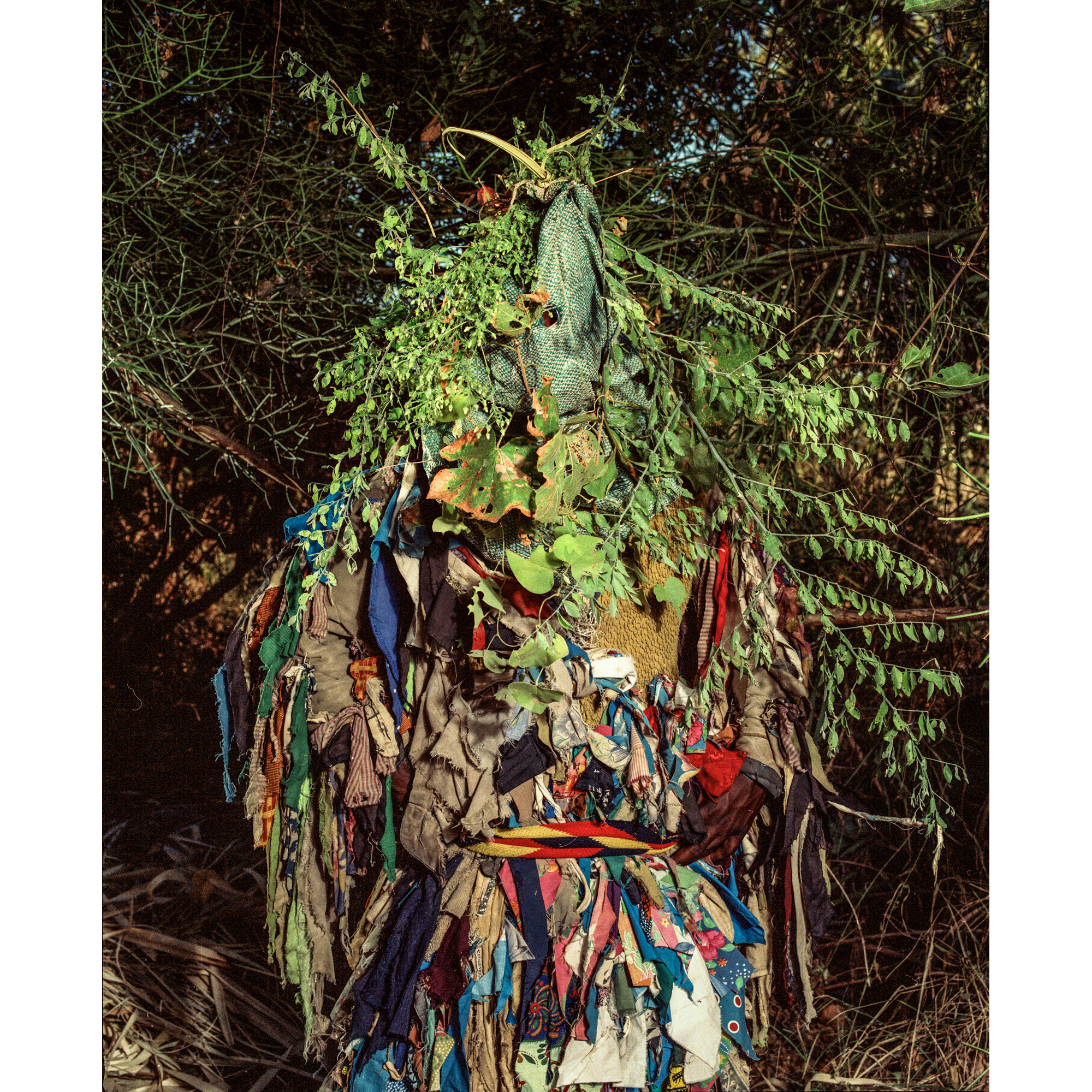
"Kanid Yamaluna" Galu Onenengi village, Dowa district, Malawi
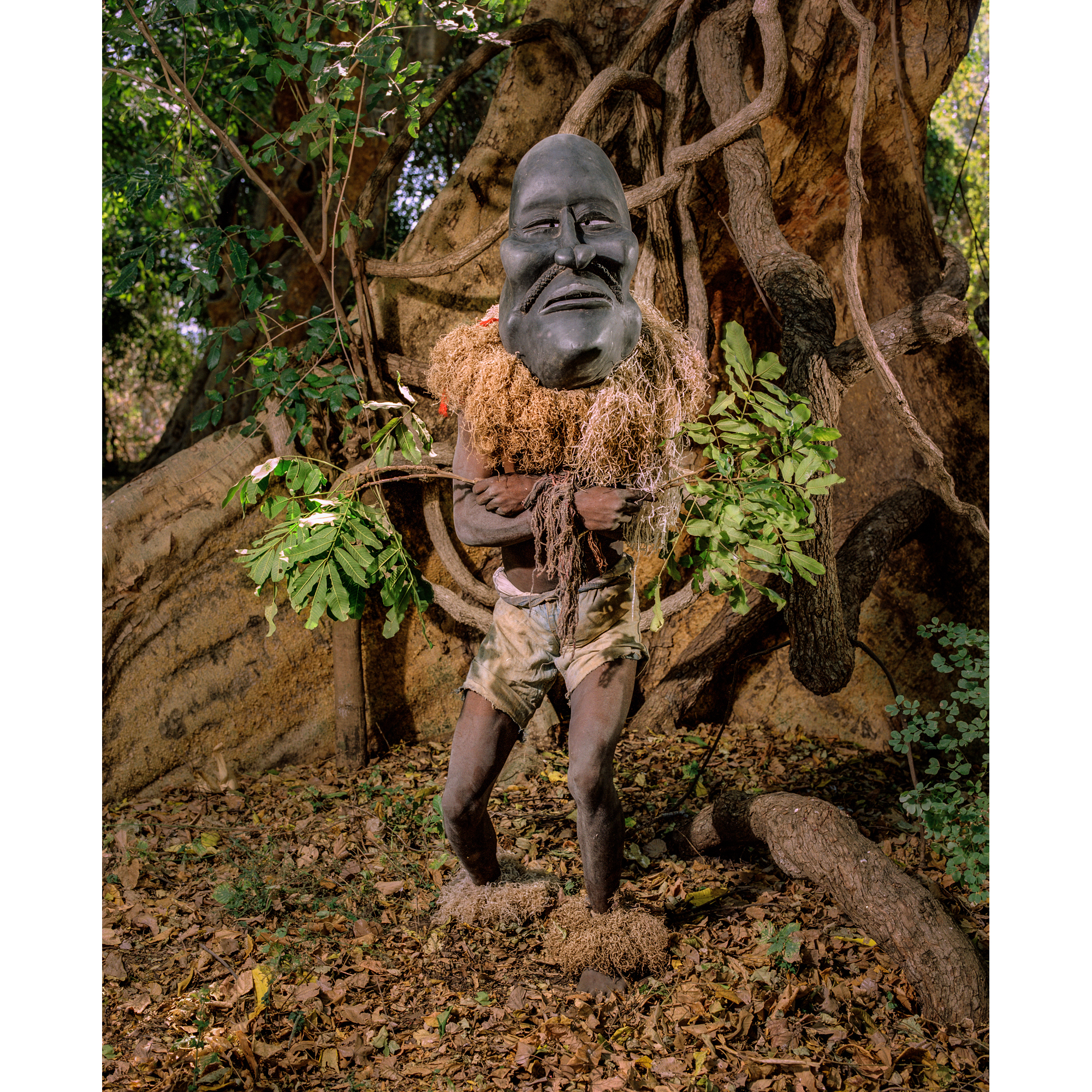
“Pedegu” / ‘the deaf orphan’ Pedegu is unable to provide for himself as he paid no attention (was deaf) to the teachings of his elders and now, orphaned and forlorn, is incompetent and impotent, loudly mocked by the village women. Kalindiza village, Kachindamoto District, Malawi 1999

"Apatakasi" / 'the Portuguese slaver' Apatakasi marks the onset of slavery for the Chewa people, at the same time the holes in his face represent the arrival of syphilis, brought to Africa from the New World. Hatcliffe, Harare, Zimbabwe 1997
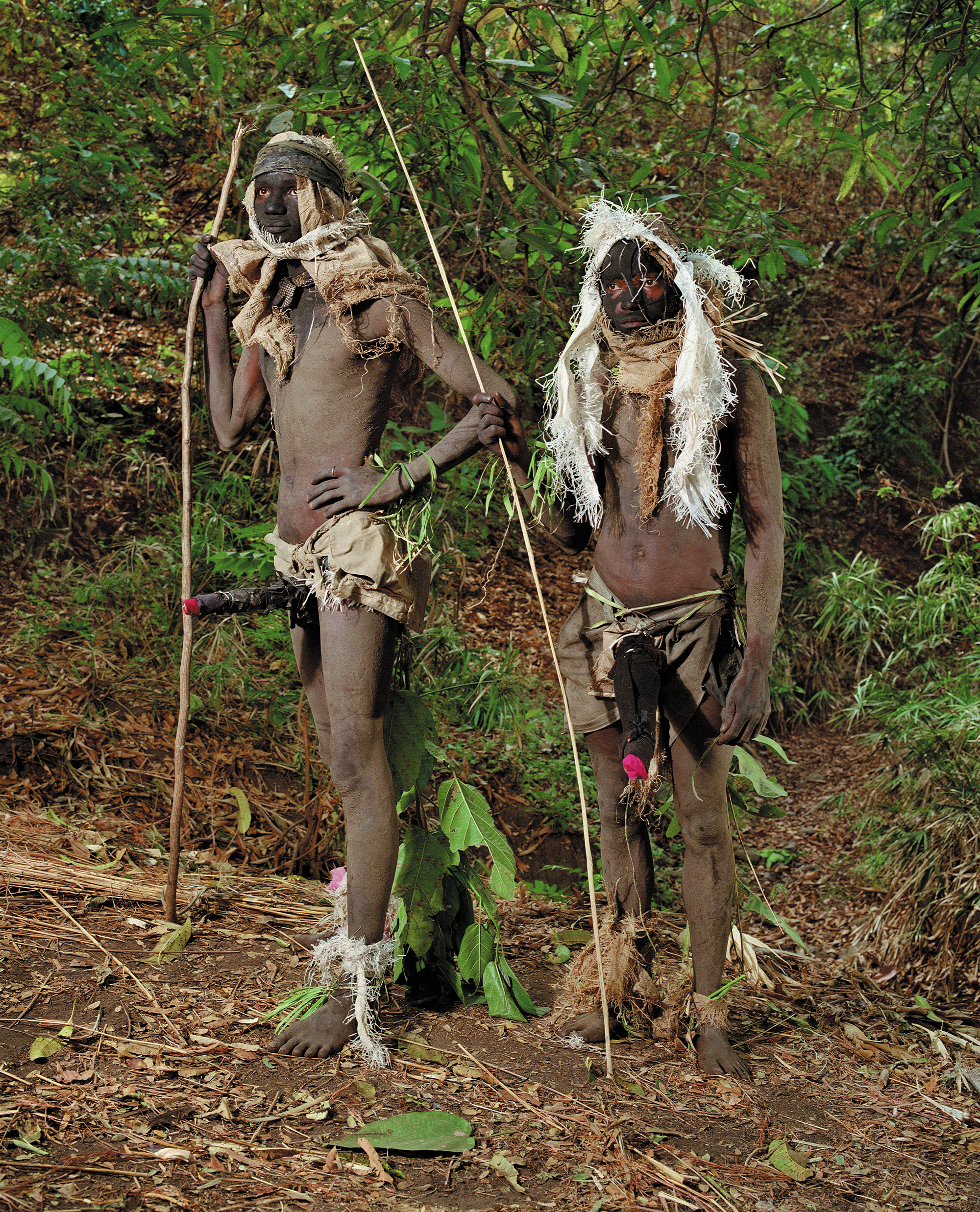
"Chintabwa" reinforces rules governing sexual relations, especially with menstruating women and the need for modesty and avoiding "ndulo". Tembetembe village, Kachindamoto, Malawi

"Kundola" / 'from Ndola'. As the Chewa response to external pressures, the masks of nyau also transform to reflect the impacts on Chewa culture. Kundola, tells the story of a young man returning from labour in the copper mines of Ndola, Zambia, but the protrusions on his face reveal his affliction with sexual disease. He has power and money, symbolized by his horns, but they are twisted, unhealthy. Formerly, Kundola was known as "Msakabeywa", the boastful hunter who returns not with "nyama" (meat), but only mice. Mthembanji village, Kachindamoto, Malawi

"Woiepa Sakwea" / 'born ugly must not be sad' To be born ugly is not an excuse to be unhappy or unpleasant. Harmony within the Chewa family household and village is essential. Kalindiza village, Kachindamoto, Malawi
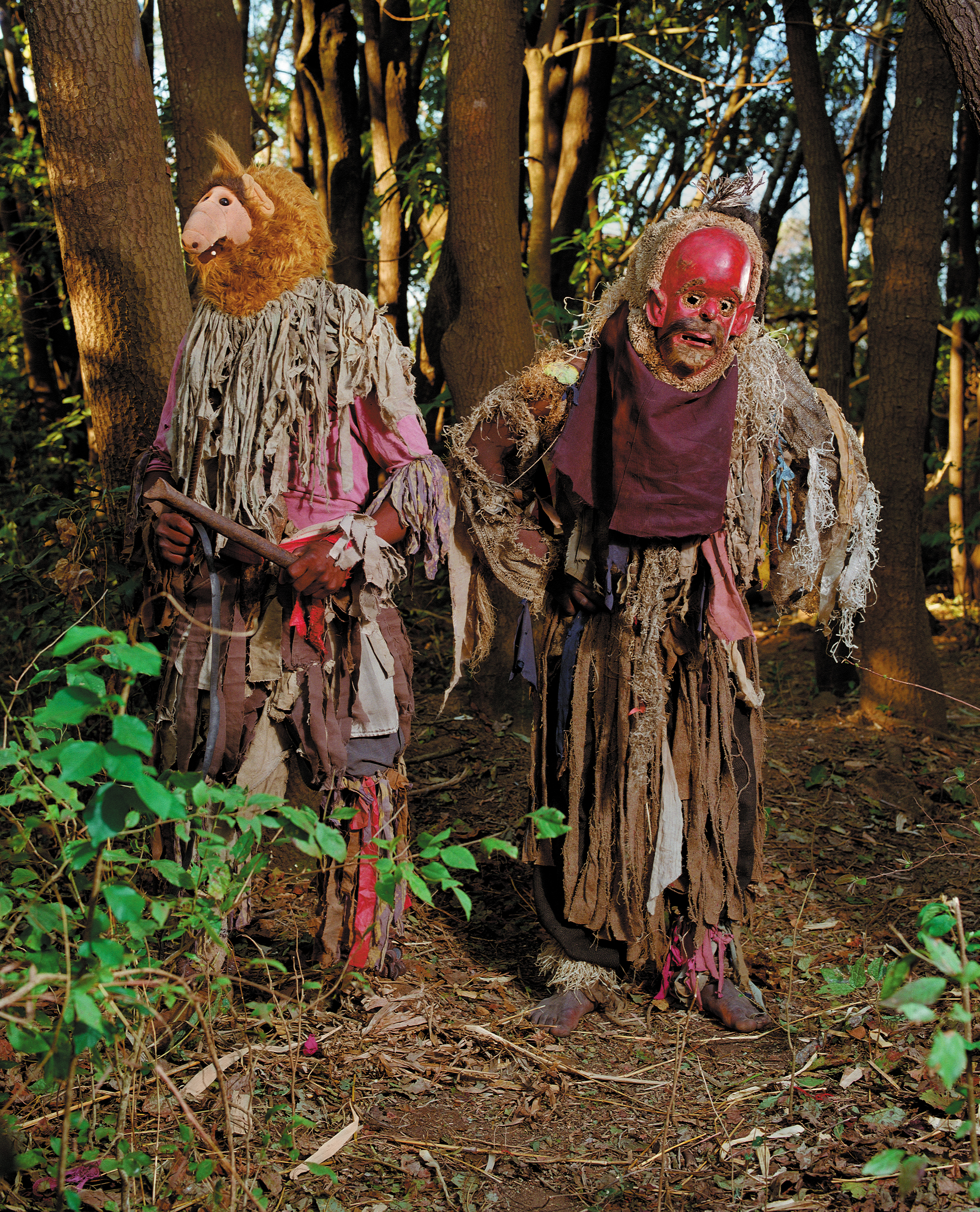
"Tsegulani Zipi & Tsekani Zipi" / 'open the zipper' ' close the zipper' The devastation of AIDS in the 1990s lead to vigorous activism at the national and local level and became a core message of education adopted by nyau dancers. Galomoti village, Dowa. Malawi

"Mkuwe Themu" / 'howl at the sound' Kamenya village, Kachindamoto, Malawi
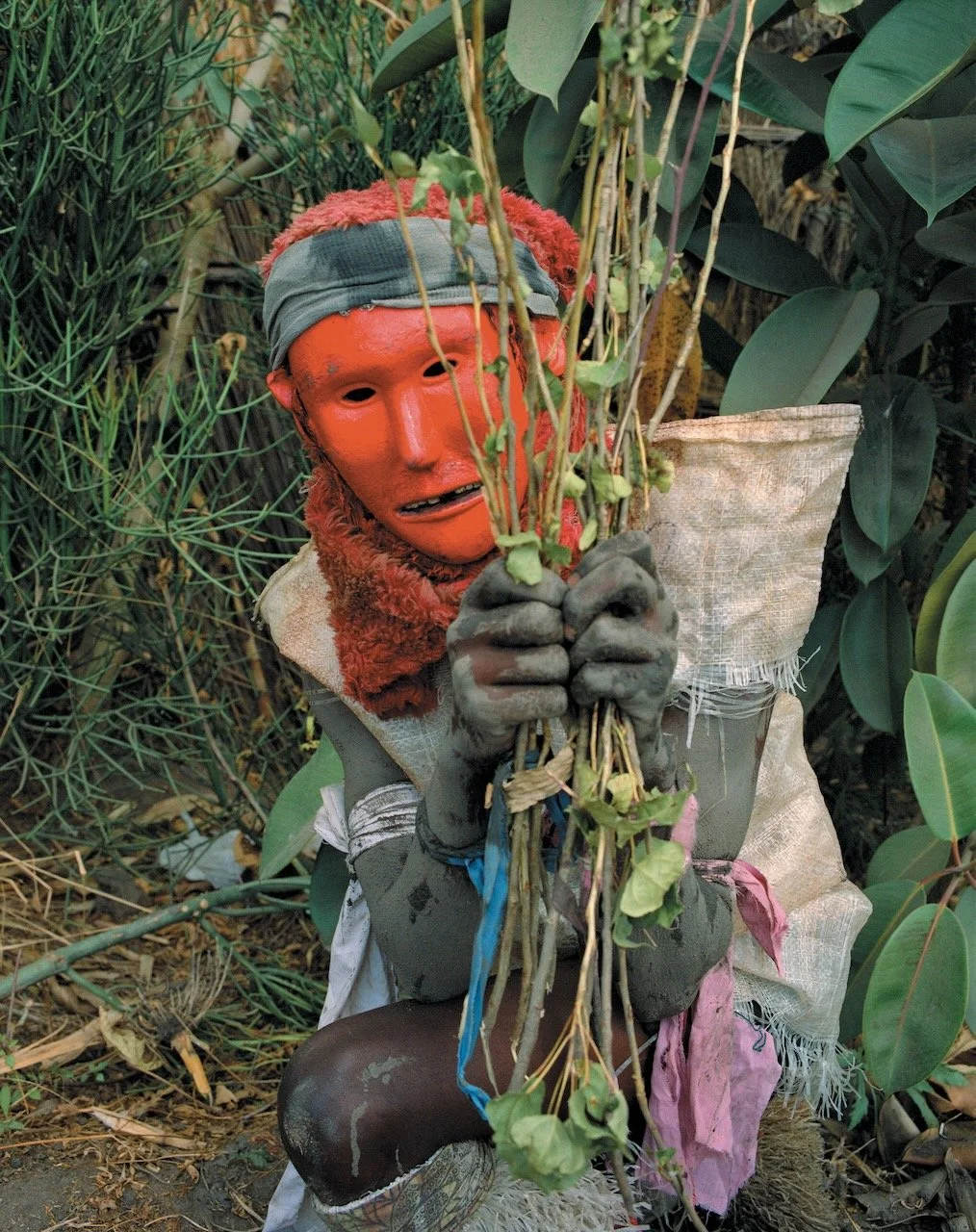
"Simoni" / 'Simon Peter', first appeared in the 1920s, as a caricature of the Christian apostle at a time when traditional Chewa culture and beliefs were under attack by Christian missionaries and colonial officials. As Chewa became increasingly Christenized, Simoni transposed into a seer and fully integrated into Chewa precepts. Western Triangle, Harare, Zimbabwe 1996
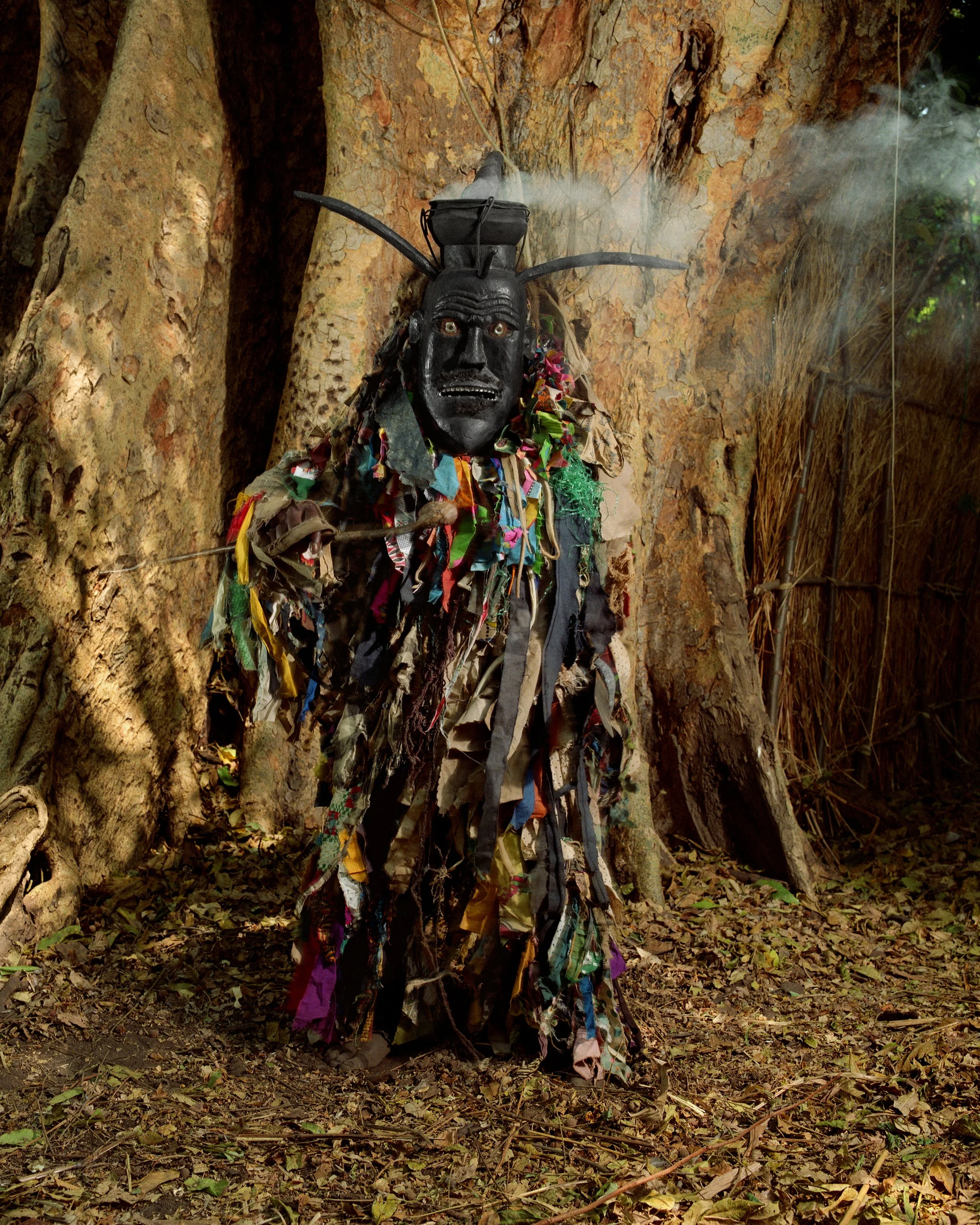
"Mbaula"/ Also know as "Kambulitso" / 'popcorn'. Mbaula's fierce black face symbolizes the deeds of night and the darkness of men's hearts. He hides evil intentions under the cover of generosity, using tricks and fear to accomplish his aims. At the 'bwalo' (danceground) a fire is lit in the bowl on his head and maize kernels roasted into popcorn. Implicit in the popcorn made on his head is a reference to Malawi's former President for Life, Hastings Banda, who lured ranks of villagers to follow him to rallies across the country. Chitule village, Kachindamoto, Malawi
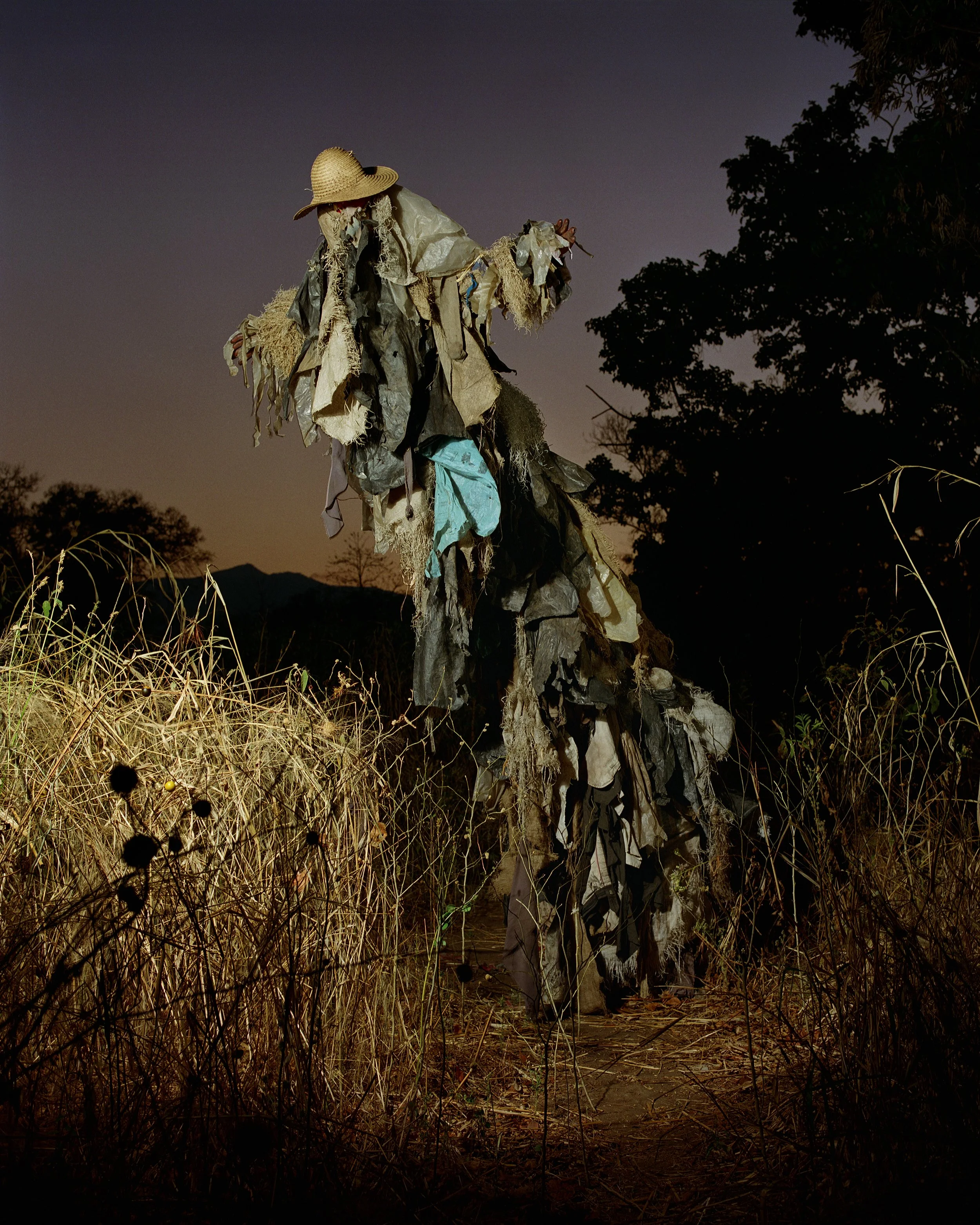
"Mfiti Alaula" / 'the witch reveals itself" It is the role of Gule Wamkulu and the masked spirit dancers to re-affirm the 'mwambo', the rules of culture that support harmony as custodians of the liminal world between the living and the ancestors of the World of the Dead. As Mfiti Alaula bends and swoops over the 'bwalo', the men's chorus sing, "The witch, the witch is revealing itself in the open!", while the women sing, "Men are clever like wild animals, they bring "zilombo" (wild beasts) into the village, even witches!". Kafulama village, Kachindamoto, Malawi 1999
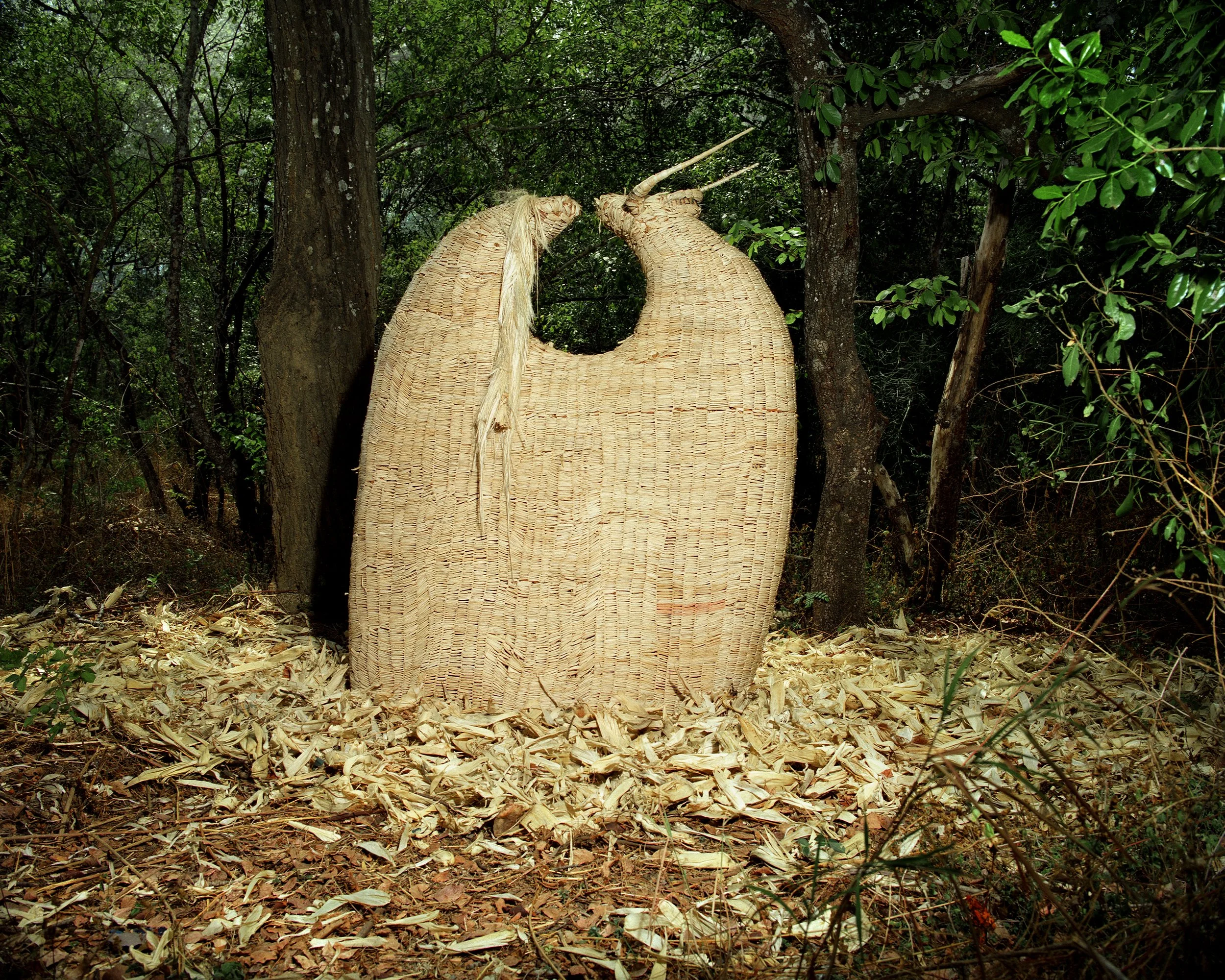
"Kasiyamaliro" / 'the one who accompanies the deceased to the graveyard' Kasiyamaliro is a large basket-woven structure, a stylized roan antelope, the symbol of life and bounty. The curved, looping back is a symbolic womb, the embodiment of life. During initiation ceremonies, the blindfolded initiates are forced to crawl on their belly, find and crawl up inside the structure of kasimaliro, where in the dark closeness they are told the high secret of Gule Wamkulu and the nyau spirit brotherhood, not to be revealed to others "osadziwa" (not knowing), under pain of death. Dzololo village, Kaphuka, Malawi 2002
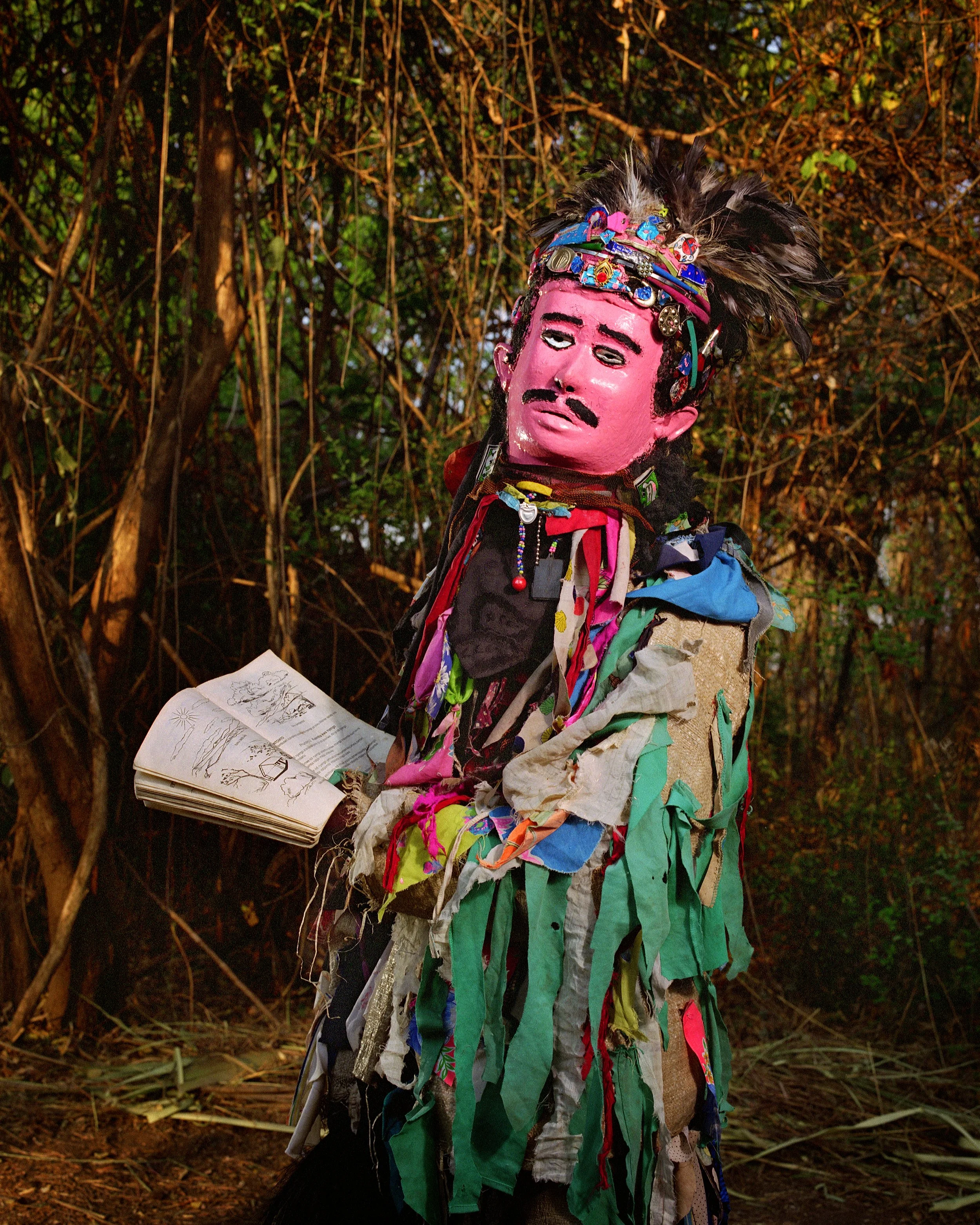
"Kanyoni" / 'the colonial superintendent'. An overbearing British District Commissioner in the 1930s, Kenyon-Slaney, is reviled for his rigidity and adherence to rules. Reportedly, he once beat a corpse with his swagger stick, declaring the man to have died to avoid paying his hut tax to the English king. To be termed "a real Kanyoni" remains a supreme insult among Malawians and equally applied to grasping, corrupt black politicians. At the bwalo, Kanyoni brandishes a switch and shakes an open book, held upside down, implying that the rules apply to others but not to him. Madziansatsi village, Kachindamoto, Malawi 1999
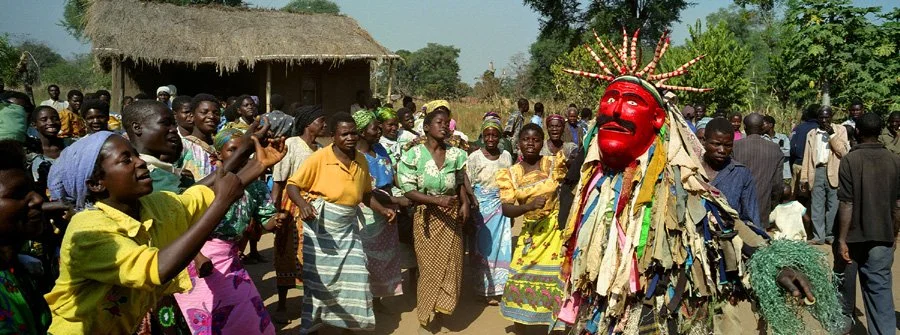
"Kamvulumvulu" / 'the whirlwind' dancing "kumema", a remembrance ritual for a villager. Gule Wamkulu is performed at funerals, "coming-of-age" initiation ceremonies and set intervals of mourning rituals. Luwengwa village, Kachindamoto, Malawi 2004
Additional Material
View a selection of imagery of the Nyau spirit masks engaging with their communities at puberty rites, funerals, and remembrance rituals. Kachindamoto Traditional Authority, Dedza, Malawi
Video - Nyau Dancers